How to Clean a Hairbrush Properly and How Often
A hairbrush collects far more than shed hair. Oil, dry shampoo, styling product, dust and lint settle between the bristles, then move back through clean hair each time the brush is used.
Cleaning it properly starts with identifying what the brush is made from. A solid plastic brush can tolerate a more thorough wash than wood, natural bristles, a cushioned base or an electrical styling brush.
Remove trapped hair first
Work on a dry brush. Pull loose hair away with your fingers, then use the pointed end of a comb, a dedicated brush-cleaning tool or blunt tweezers to lift compacted strands from the base.
Cut through dense hair in one or two places with small scissors only when you can clearly see the blades and the brush base. Keep the scissors facing away from bristles and cushioning, then pull the sections out.
How to clean plastic and metal brushes
If the brush is solid plastic or metal with no wooden, padded or electrical parts, fill a bowl with lukewarm water and a small amount of mild shampoo or soap. Swish the bristles through the water and use an old clean toothbrush to work around the base.
Rinse thoroughly without leaving soap between the bristles. Shake off excess water, wipe the handle and dry the brush with bristles facing down on a clean towel.
How to clean a wooden hairbrush
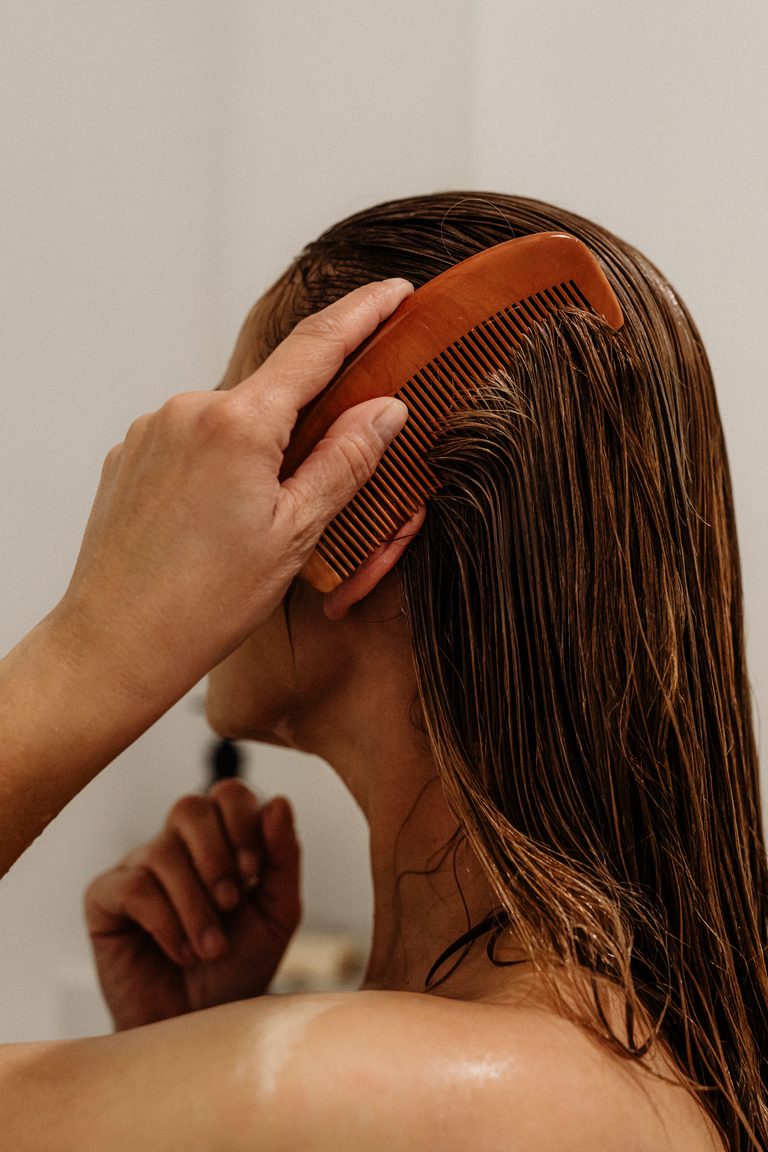
Do not soak wood. Remove the hair, then wipe the bristles and base with a cloth lightly dampened with diluted mild cleanser. Use a damp cotton bud or soft toothbrush for small areas, keeping moisture controlled.
Wipe again with a clean barely damp cloth and dry immediately. Follow the maker’s instructions for any oil or finish used on the wood; household oils can turn rancid or damage a coating.
How to clean natural-bristle brushes
Natural bristles can lose their shape or become brittle if treated harshly. Remove trapped hair carefully, then clean the bristle tips with a small amount of mild shampoo and limited water. Keep the base and handle as dry as possible.
Rinse the bristles briefly, blot and dry facing down. Do not leave a natural-bristle brush soaking in a sink.
How to clean cushioned and vented brushes
A cushioned brush can trap water through the small vent hole or around the edge of the pad. Avoid submerging it. Hold the brush with bristles downward and clean the surface with a damp, soapy toothbrush, then wipe and rinse in a controlled way.
Vented plastic brushes can usually be rinsed more freely, but check for rubberised handles, glued sections or maker-specific instructions first.
How to clean electrical brushes
Unplug the tool and allow it to cool completely. Never immerse an electrical brush or let water enter vents, controls or the power connection. Remove hair with the tool supplied or a dry cleaning brush, then wipe accessible surfaces as directed by the manufacturer.
If the removable head is washable, detach it and follow its separate instructions. Do not assume a tool is washable because it is used on damp hair.
Drying matters as much as washing
Blot excess moisture, then place the brush bristle-side down or angled so water moves away from the base and handle. Give it full airflow and leave it until completely dry.
Do not dry brushes on a radiator or use very hot air. Heat can warp plastic, crack wood and weaken adhesive. Do not return a damp brush to a drawer or closed toiletry bag.
How often should you clean a hairbrush?
Remove trapped hair at least weekly, or every few uses if you shed heavily. Wash a frequently used styling brush roughly every two to four weeks, adjusting for oily hair, dry shampoo and product use.
Brushes used only on clean hair may need washing less often. Clean sooner whenever the base looks dusty, bristles feel coated or the brush has a stale smell.
Keep it cleaner between washes
- Do not use the brush immediately after applying a large amount of wet styling product unless it is designed for that use.
- Remove shed hair before it compacts around the bristles.
- Store the brush away from bathroom spray, open products and dusty surfaces.
- Wash hats, pillowcases and hair towels regularly too.
- Keep brushes used for pets or other people separate.
If drying technique is part of the product build-up problem, our guide to air-drying hair without frizz explains how to handle hair with less repeated brushing while it dries.
When to replace a hairbrush
Replace a brush when bristles or pins are sharp, missing or bent beyond repair; the cushion has split; the handle is cracked; or product and odour cannot be removed. A damaged brush can scratch the scalp or catch strands even when it looks clean from a distance.
The bottom line
Remove hair while the brush is dry, then use the least water the material requires. Plastic can usually handle a fuller wash; wood, natural bristles, cushions and electrical parts need controlled cleaning. Dry everything completely before the next use.
Frequently asked questions
Only if it is a simple solid plastic or metal brush and the manufacturer allows it. Wood, cushioned bases, natural bristles and electrical brushes should not be soaked.
Lukewarm water and a small amount of mild shampoo or soap work for many washable brushes. Always match the method to the material and check the maker’s instructions.
Lift out hair first, then use blunt tweezers, a brush-cleaning rake or a soft toothbrush. Work slowly so you do not puncture the cushion or pull out bristles.
Oil, dampness and product residue may be trapped around the base. Clean and dry it fully; replace the brush if odour remains or if mould or material damage is visible.