
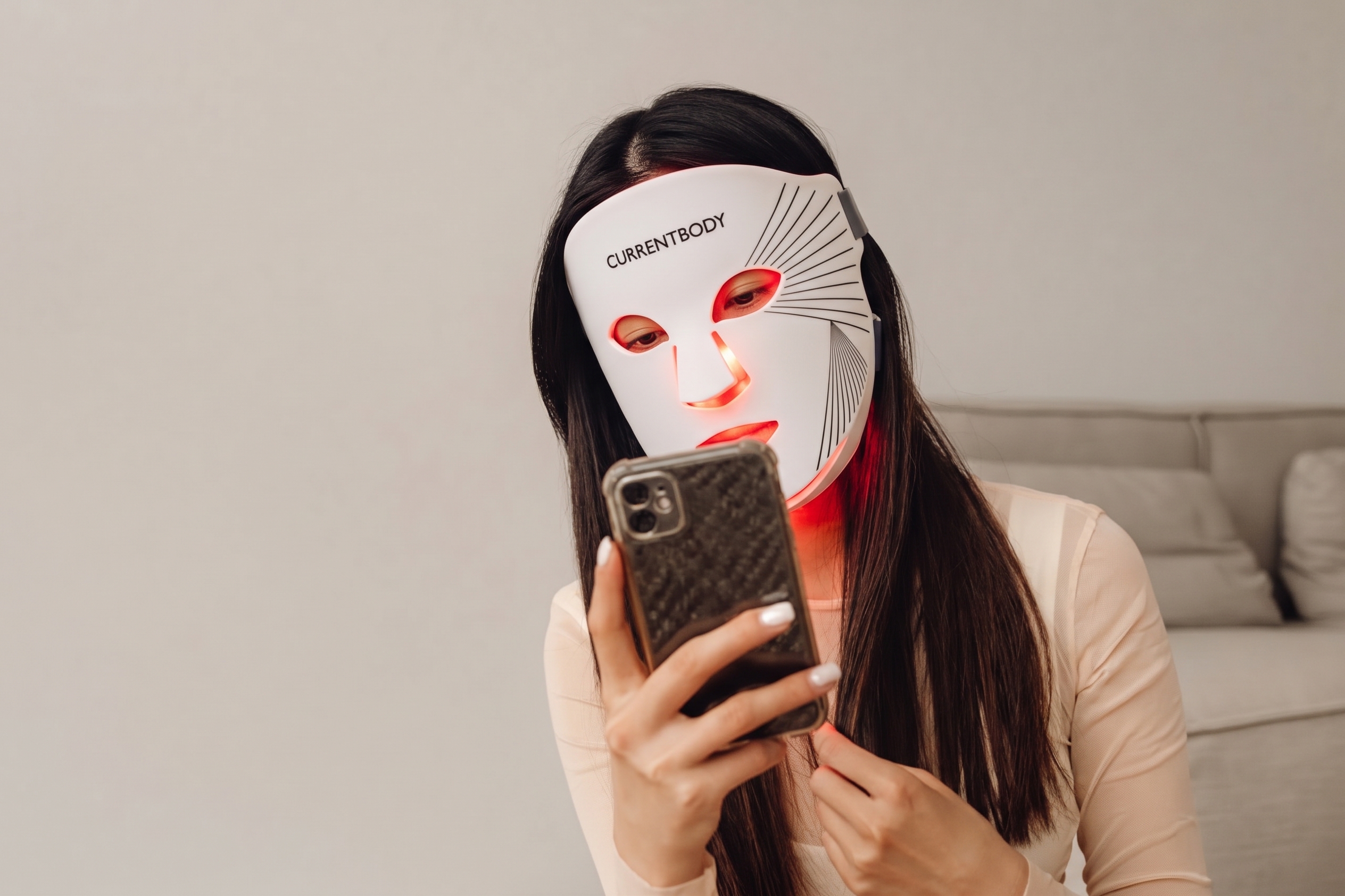
How Often Should You Use an LED Face Mask?
Most at-home LED face masks are designed to be used for around 10 minutes, three to five times per week during the initial treatment period. After four to eight weeks, many brands recommend reducing this to maintenance sessions.
That is a useful starting point, not a universal rule.
The correct frequency depends on the exact mask, its wavelength, energy output and intended concern. An Omnilux Contour routine is not automatically interchangeable with a CurrentBody preset, and a red-light treatment should not be treated like a blue-light acne session simply because both happen inside the same mask.
The safest answer is also the least glamorous: follow the schedule supplied with your device. Using it twice as often does not mean you will get results twice as quickly.

The short answer
For many popular home LED masks, a sensible routine looks like this:
- Starting phase: Three to five sessions each week
- Session length: Usually 10 minutes
- Initial treatment period: Approximately four to eight weeks
- Maintenance: One to three sessions weekly, depending on the manufacturer’s instructions
- Rest days: Useful if your skin feels dry, tight or irritated
Some devices are designed for daily use. Others are not. Always check the manual rather than copying somebody else’s routine from social media.
Why LED mask schedules are different
“LED face mask” describes a category, not one standard treatment.
Masks can use different combinations of:
- Red light
- Near-infrared light
- Deep near-infrared light
- Blue light
- Green light
- Yellow or amber light
They also vary in irradiance, treatment time and the distance between the LEDs and your skin. Two masks that look almost identical may deliver a different dose during a 10-minute session.
This is why the number of weekly treatments should come from the manufacturer of the exact device. More LEDs, a brighter glow or a higher price does not tell you how often the mask should be used.
How often should you use a red-light face mask?
A common schedule for at-home red and near-infrared masks is three to five sessions per week.
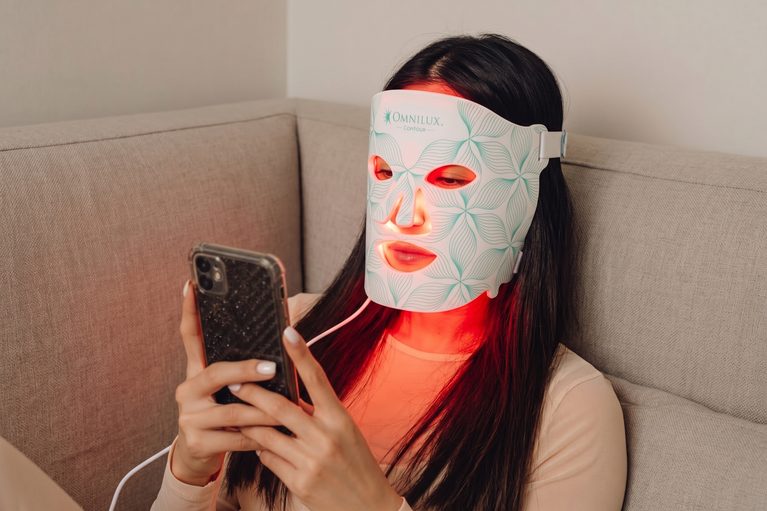
For example, Omnilux recommends using its Contour device for 10 minutes, three to five times weekly for four to six weeks, followed by maintenance treatments. CurrentBody’s routines vary by device and programme, with guidance supplied through the product instructions and app.
Red and near-infrared light are widely marketed for the appearance of fine lines, firmness, redness and overall skin quality. These changes are gradual. You are building a consistent routine over weeks, not trying to create an immediate peel-like effect after one session.
If you miss a day, continue with the normal schedule. Do not stack several sessions together to “catch up.”
Can you use an LED face mask every day?
You can use some LED masks every day if the manufacturer explicitly says you can. That does not mean every mask should be used daily.
LED light is often described as gentle because it does not use ultraviolet light and should not feel hot or painful. However, gentle does not mean impossible to overuse. Cleveland Clinic notes that red-light devices appear safe when used short-term and as directed, but misuse or excessive use may risk skin or eye damage.
Daily sessions may also make a routine harder to assess. If your skin becomes dry or reactive, you will not know whether the mask, an active skincare product or the combination is responsible.
Unless your device specifies daily use, three to five well-spaced sessions are a more sensible approach than treating your face whenever you remember.
What happens if you use an LED mask too often?
Overusing a mask will not necessarily create better results. Depending on the device and your skin, you may notice:
- Dryness
- Tightness
- Temporary redness
- Increased sensitivity
- Eye discomfort
- Irritation when combined with strong skincare products
Stop using the device if the treatment becomes painful, unusually hot or causes a persistent reaction. Check the troubleshooting guidance and speak to a qualified professional if you are concerned.
The aim is a routine your skin tolerates consistently. A slightly less frequent schedule you can maintain is more useful than an aggressive one you abandon after ten days.
How long does an LED face mask take to work?
Do not judge a mask after a week.
Many manufacturers assess cosmetic results over four to eight weeks of regular use. Some people notice that their skin looks calmer or brighter sooner, while changes in the appearance of fine lines or firmness may be more gradual.
Take photographs in the same place, at the same time of day and in the same lighting. Day-to-day mirror checking is unreliable because sleep, hydration, menstrual cycles and lighting can all alter how your skin appears.
It is also worth being realistic. Red-light therapy is promising, but it is not proven for every claim attached to it. Cleveland Clinic describes it as an emerging treatment and notes that more high-quality research is still needed for many uses.
The best time of day to use an LED mask
There is no single best time. The best time is the one you can repeat without rushing.
Morning works well if:
- You already have a calm skincare routine
- You can use the mask on clean skin before applying makeup and SPF
- Evening routines tend to become inconsistent
Evening works well if:
- You want the session to feel relaxing
- You have more time to cleanse thoroughly
- You want to apply the rest of your skincare immediately afterwards
Consistency matters more than whether you use the mask at 7am or 9pm.
Should you use an LED mask before or after skincare?
Most LED masks are intended for use on clean, dry skin before the rest of your skincare routine.
Makeup, SPF and heavy products can interfere with how the device sits against the face. Some brands sell compatible serums that can be used with their masks, but that does not make every serum LED-friendly.
A simple routine is:
- Remove makeup and cleanse your skin
- Dry your face completely
- Complete the LED session
- Apply hydrating or treatment products
- Finish with moisturiser
- Apply broad-spectrum SPF if it is daytime
Follow the instructions if your brand recommends a different order.
Can you use retinol and an LED mask together?
Red light and retinoids are often used within the same wider skincare routine, but tolerance matters.
The light itself is not UV. The potential issue is irritation from combining several active steps or using a product that increases photosensitivity. Check both the mask instructions and the information supplied with your skincare.
If you are introducing a retinoid and an LED mask at the same time, it becomes difficult to identify the cause of any reaction. Introduce one change first, let your skin settle and then add the other.
If you use prescription skincare or medication that causes photosensitivity, get medical advice before using an LED device.
Do you need rest days?
Rest days are not mandatory for every mask, but they make a three-to-five-day schedule easy to manage.
You could use a red-light mask on Monday, Tuesday, Thursday and Saturday, for example. This creates four consistent sessions while leaving space to observe how your skin responds.
A schedule should work around your life. If you always forget at weekends, use the mask on weekday mornings. If workdays are chaotic, anchor it to three quieter evenings.
Do not turn a beauty device into another habit you can fail at.
A realistic LED face mask routine
Here is a simple routine for a mask whose instructions recommend three to five weekly sessions:
Weeks one and two
Use it three times per week. This gives you time to learn the fit, controls and cleaning routine while checking that your skin is comfortable.
Weeks three to eight
Increase to four or five sessions if the manufacturer’s guidance allows it and your skin is tolerating the mask well.
After the initial course
Move to the recommended maintenance schedule. Depending on the device, this may be one to three sessions per week.
Maintenance does not mean the mask has stopped working. It means you are moving from the more intensive introductory schedule to a routine intended to sustain the result.
How to make the routine easier to maintain
An LED mask is only useful if it comes out of its bag.
- Keep it charged
- Store it near the place where you cleanse
- Choose fixed treatment days
- Clean it immediately after use
- Use the 10 minutes for something you already enjoy, such as an audiobook
- Track sessions for the first eight weeks
- Take monthly photographs instead of inspecting your face every morning
A complicated schedule is not more effective merely because it feels serious.
When should you avoid using an LED mask?
Check the contraindications supplied with the device before the first session.
Ask a healthcare professional for personalised guidance if you:
- Take photosensitising medication
- Have a diagnosed light-sensitive condition
- Are treating an active skin condition
- Experience seizures triggered by light
- Have unexplained skin changes
- Are pregnant and the brand advises seeking medical guidance
- Are unsure whether the device is appropriate after a procedure
Use the supplied eye protection when instructed and never assume that closing your eyes overrides the manufacturer’s safety advice.
The bottom line
For most home LED masks, three to five 10-minute sessions per week for four to eight weeks is a common starting routine, followed by maintenance. But the schedule on your device takes priority over any general rule.
Use the mask consistently, not excessively. Keep the rest of your routine simple, photograph progress under consistent lighting and give it enough time before deciding whether it has earned its place in your bathroom.
If you are still choosing a device, read our guide to CurrentBody Series 3 vs Omnilux Contour before spending several hundred pounds.
Frequently asked questions
It can be. Three sessions per week falls within the recommended schedule for several popular devices. Follow the exact instructions for your mask.
Do not double up unless the manufacturer specifically instructs you to. More frequent exposure does not guarantee faster results and may increase the chance of irritation.
Either is fine. Use it on clean skin at the time you can follow consistently.
Many at-home masks run for 10 minutes, but session lengths vary. Let the device timer and manual decide rather than extending the treatment yourself.
Ongoing maintenance is commonly recommended. Results vary, and an LED mask does not replace sunscreen, a suitable skincare routine or professional treatment where needed.
One Comment