How to Make Air-Dried Hair Look Less Frizzy
Air-drying sounds like the easiest possible hair routine: wash it, leave it alone and wait.
Then it dries into a fluffy triangle, the roots sit flat, the ends look thirsty and you start wondering why using no styling tool somehow produced so much frizz.
The problem is not necessarily air-drying itself. It is that hair still needs shape, moisture and a little control while it moves from wet to dry. A hairdryer normally does some of that work for you. When you remove the dryer, the wash, towel and product stages matter much more.
The best air-dried result begins before you step out of the shower.
The short version
To air-dry hair with less frizz:
- Condition properly
- Detangle while the hair is wet
- Squeeze out water instead of rubbing with a towel
- Apply styling products to very damp hair
- Create the shape you want before drying begins
- Stop touching it
- Let it dry completely before breaking up any cast
- Finish with a tiny amount of oil if needed
The biggest mistake is waiting until the hair is half dry before trying to control it.
Why does hair go frizzy when it air-dries?
Frizz is not one single problem. It can come from natural texture, dryness, damage, humidity, product buildup or physical friction.
As wet hair dries, it settles into a shape. If individual sections are drying in different directions—or being brushed, touched and moved repeatedly—the surface looks less uniform. Raised or damaged cuticles can make that effect more obvious.
This is why leaving hair entirely product-free does not always create the effortless result people expect. Air-drying removes direct heat, but it does not automatically add moisture, definition or hold.
Your aim is not to make every strand perfectly flat. It is to help the hair dry in deliberate sections rather than as thousands of separate, fluffy strands.

Start with the right amount of conditioner
If hair consistently feels rough after air-drying, look at the wash stage before buying another styling cream.
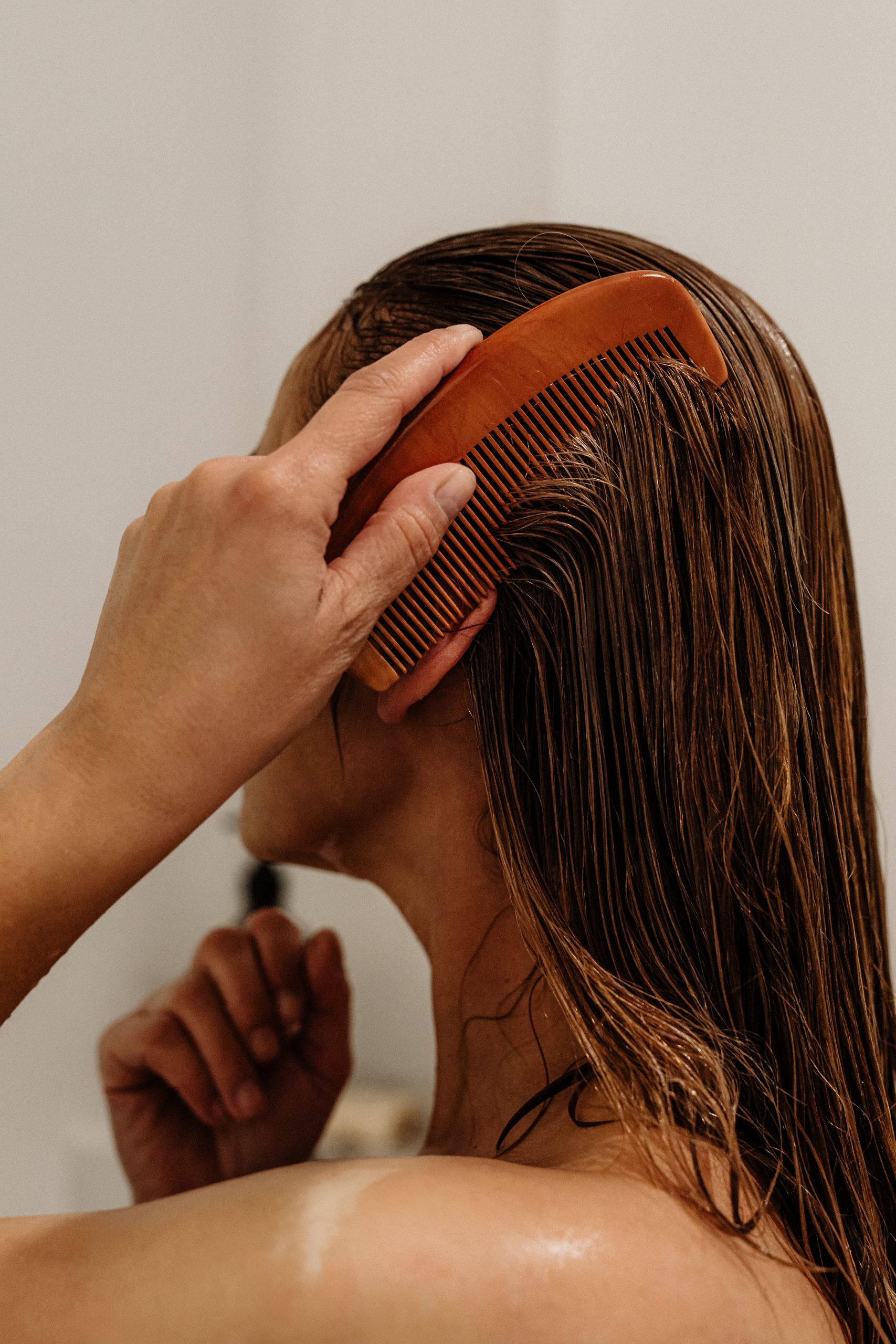
Apply conditioner mainly through the mid-lengths and ends. Give it enough time to soften the hair, then detangle gently with your fingers or a wide-tooth comb before rinsing.
Fine hair still needs conditioner. The solution is usually a lighter formula or a smaller amount—not skipping it and trying to repair the dryness with oil afterwards.
If your hair has a lot of product buildup, an occasional clarifying wash can help. Layers of dry shampoo, silicone, oils and styling products may stop hair from behaving predictably even when it does not look dirty.
Do not rough-dry it with a bath towel
Rubbing wet hair with a terry towel creates friction and disrupts the sections you just smoothed in the shower.
Instead:
- Squeeze excess water out with your hands
- Wrap or blot the hair with a microfibre towel or soft cotton T-shirt
- Avoid twisting it into an extremely tight turban
- Remove the towel while the hair is still damp enough to accept product
You are trying to remove dripping water, not dry the hair halfway before styling begins.
A dedicated microfibre hair towel is one of the easiest affiliate products to place naturally in this article because it solves a clear part of the problem without promising a miracle.
Apply products while your hair is still very damp
Hair products spread more evenly when there is enough water present.
If you wait until the surface has begun to dry, you may end up with too much product in some areas and none in others. The result can be greasy ends, frizzy patches and a coating that sits on top of the hair.
A useful basic combination is:
- Leave-in conditioner or lightweight cream for softness
- Mousse, foam or gel for shape and hold
- A small amount of serum or oil after drying for the finish
You may not need all three. Fine hair might do best with leave-in spray and mousse. Thick or curly hair may need a richer cream followed by gel.
Hold is the missing step in many unsuccessful air-dry routines. Moisture makes hair feel softer; hold helps it dry in a controlled shape.
Use less product than you think—then distribute it properly
Too much product can make air-dried hair look heavy and strangely separated. Too little leaves areas completely unprotected from humidity.
Start with a modest amount and add more only where it is needed. Rub it between your hands, then work in sections rather than smoothing everything over the outside layer.
Pay particular attention to:
- The hair around the face
- The underneath sections at the nape
- Dry ends
- The crown, where frizz is most visible
- Any area with a different texture from the rest
A wide-tooth comb or flexible styling brush can help distribute product, but brush only while the hair is wet. Constantly brushing as it dries pulls apart the sections and creates more fluff.
Give straight or gently wavy hair a shape
If your hair is mostly straight, simply leaving it loose can create random bends where it touches your shoulders or clothes.
Try one of these methods:
For straighter results
Create your usual parting, comb the hair into place and tuck only the front sections behind your ears if you like that shape. Avoid repeatedly running your fingers through the lengths.
For soft bends
Divide the hair into two or four loose sections and twist each section away from the face. Leave the twists loose rather than tying them tightly. Gently separate them only once completely dry.
For more root lift
Move the parting slightly to the opposite side while the roots dry, then flip it back when the hair is almost finished. Small root clips can also lift sections away from the scalp without disturbing the lengths.
Do not put damp hair into a tight bun and expect smooth, even waves. The outside may dry while the centre stays wet for hours, and the hair tie often creates a sharp dent.
Help wavy and curly hair form groups
Wavy and curly hair usually looks more defined when strands dry together in clumps rather than being separated by repeated combing.
After applying product:
- Work in sections
- Brush or rake the product through once
- Scrunch upwards to encourage the pattern
- Add a little gel or mousse for hold
- Stop touching it while it dries
If the product creates a crisp cast, that is not the finished result. Wait until the hair is fully dry, then gently scrunch with clean hands or one drop of lightweight oil to soften it.
Breaking the cast too early interrupts the shape before it has set.
The rule that makes the biggest difference: stop touching it
Air-drying takes longer than blow-drying, which creates far more opportunities to interfere with the hair.
Every time you:
- Push it behind your ears
- Twist it around a finger
- Lean against it
- Brush it
- Check whether it is dry
- Put on and remove a jumper
…you change how the damp sections are settling.
Style it, place it and leave it alone. If possible, air-dry while wearing something that will not need to be pulled over your head later.
Do not go to bed with it wet
Going to sleep with damp hair works against almost everything you did during the routine.
The hair is pressed between your head and the pillow, moved for hours and held in random directions as it dries. The roots can remain damp while the ends become fluffy, and any deliberate wave pattern is crushed.
Wash earlier in the evening or allow enough time for the hair to dry fully before bed. If it is still slightly damp, use a hairdryer on a lower heat and speed rather than sleeping on it wet simply to preserve the idea of “heatless” styling.
A little controlled heat is often better than eight hours of friction.
Adjust the routine for the weather
A routine that works beautifully in dry weather can collapse on a humid day.
Humectant-rich products attract water, which can be helpful in some conditions and less predictable in others. If your hair expands as soon as you go outside, look for a product specifically designed to provide humidity resistance and use enough hold.
In cold weather, air-drying may take so long that the roots remain wet for hours. Use a diffuser or hairdryer briefly at the roots if necessary. You do not lose all the benefits of air-drying because you used five minutes of sensible heat.
How to refresh air-dried hair the next day
Do not soak the entire head unless the style genuinely needs resetting.
Try:
- Misting frizzy areas lightly with water
- Emulsifying a tiny amount of leave-in conditioner between wet hands
- Smoothing or scrunching only the sections that lost shape
- Using dry shampoo at the roots before they become oily
- Adding one drop of oil to dry ends
- Re-twisting a few face-framing sections
The goal is to refresh the existing shape, not layer a full new routine over yesterday’s product.
Common air-drying mistakes
Using oil as the only styling product
Oil can make the surface look shinier, but it does not provide much shape or hold. Use it as a finishing product rather than expecting it to control damp hair alone.
Applying product when hair is nearly dry
Product distributes unevenly and may sit visibly on the surface. Re-wet the hair lightly if it has dried too far.
Brushing throughout the drying process
Brush once to distribute product and create the desired direction. Repeated brushing separates natural texture and encourages frizz.
Using a heavy mask every wash
Over-conditioning can leave some hair flat, coated and difficult to style. Choose treatments according to what your hair actually needs.
Assuming all frizz means damage
Frizz can be part of a natural wave or curl pattern. If the hair feels healthy but expands when brushed, the answer may be more definition—not more repair products.
Forcing a completely heat-free routine
If your roots stay wet for hours or the finished shape never works for your haircut, partial blow-drying may suit you better. A low or moderate setting with good technique is not a failure.
A simple air-dry routine by hair type
Fine or straight hair
- Lightweight conditioner
- Microfibre towel
- Leave-in spray through the ends
- Small amount of mousse at the roots and lengths
- Comb into shape once
- Leave untouched until dry
Wavy hair
- Conditioner with enough slip to detangle
- Leave hair very damp
- Lightweight cream or leave-in
- Mousse or gel
- Scrunch into shape
- Break the cast only when completely dry
Thick or curly hair
- Generous conditioner through lengths
- Work in sections
- Leave-in conditioner or curl cream
- Gel for hold
- Brush or finger-style into clumps
- Air-dry without touching, or diffuse the roots if drying takes too long
Damaged or colour-treated hair
- Gentle wash routine
- Regular conditioning
- Leave-in protection
- Minimal handling
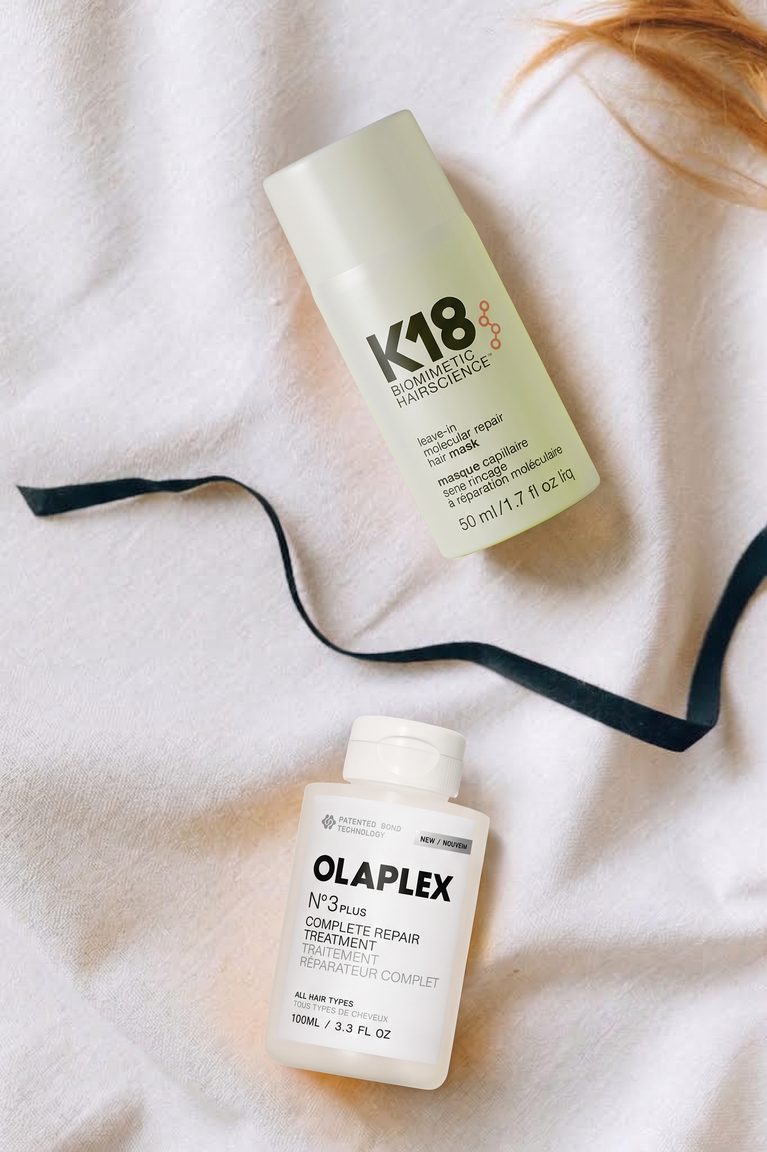
- Strategic bond-repair treatment rather than piling on oil
If you are choosing a repair treatment, our K18 vs Olaplex guide explains how their approaches differ.
The product categories worth buying
You do not need an overflowing shelf. A practical air-dry kit contains:
- A conditioner suited to your hair weight
- A microfibre towel or soft T-shirt
- A leave-in product
- One hold product
- A lightweight finishing oil or serum
That is enough to create a complete routine. Buy products because they fill one of those jobs, not because a video told you that seven layers are essential.
The bottom line
Smoother air-dried hair comes from controlling friction, distributing moisture and giving the hair a shape before it begins to set.
Condition it well, remove water gently, apply products while it is still very damp and use some form of hold. Then do the difficult part: leave it alone until it is completely dry.
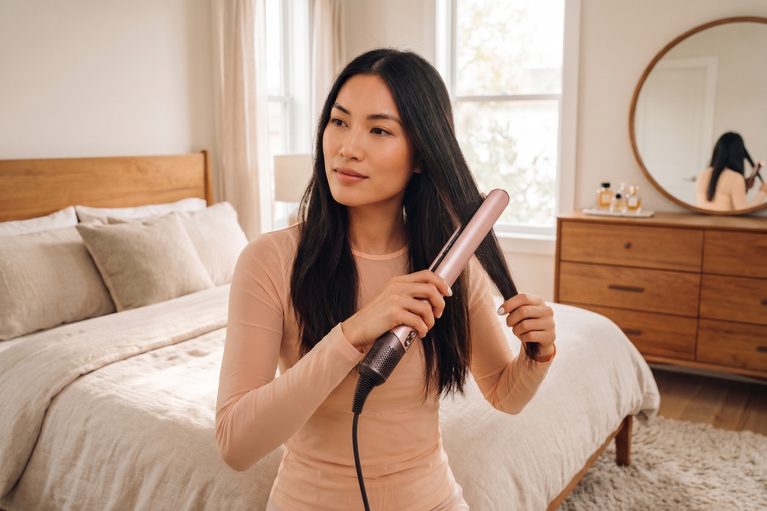
If air-drying never gives you the finish you enjoy, you do not have to force it. A controlled wet-to-dry tool may fit your routine better; our Dyson Airstrait vs ghd Duet Style: Which Is Better? explains the difference.
Frequently asked questions
It may be drying without enough moisture, hold or deliberate shape. Friction from towels and touching can also separate strands and create a fluffier result.
Use a suitable leave-in or styling product on damp hair, then add a very small amount of oil once dry if the ends need shine or softness. Heavy oil on wet hair can weigh some textures down without providing hold.
It avoids concentrated heat, but it is not automatically perfect for every hair type or routine. Hair is vulnerable when wet, and remaining damp for a very long time can be inconvenient. Gentle partial drying may be the more practical option.
Comb it into its intended parting and direction while very damp, use a smoothing product with light hold and avoid touching it. Natural texture will still influence the final result.
It is better to let hair dry before sleeping. Friction, pressure and movement against the pillow can create frizz and uneven bends.