
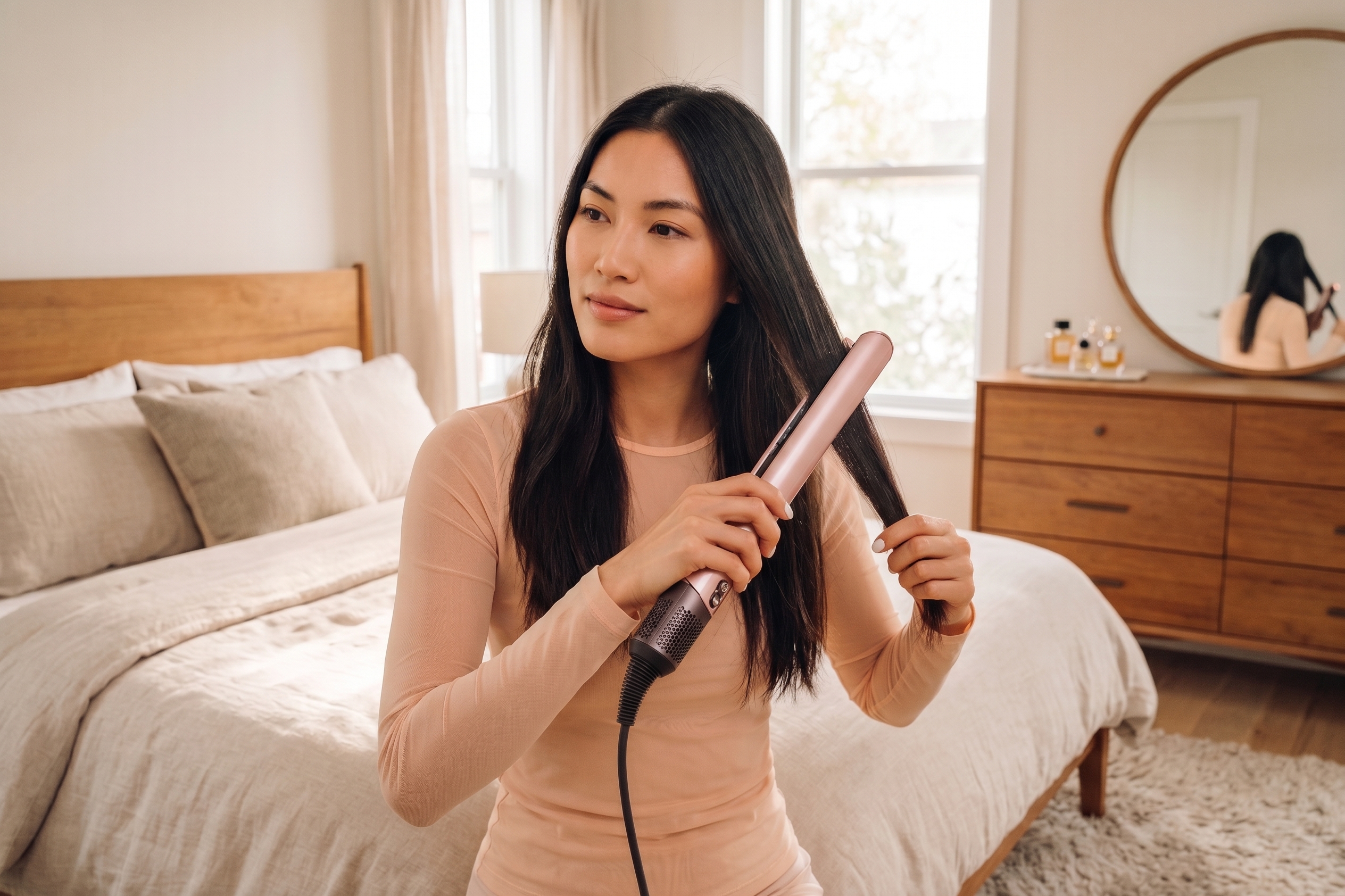
Dyson Airstrait vs ghd Duet Style: Which Is Better?
The Dyson Airstrait and ghd Duet Style promise the same very tempting thing: taking hair from wet to straight with one tool. They do not, however, use the same method or create quite the same finish.
The Dyson Airstrait straightens with directed airflow and no hot plates. The ghd Duet Style combines hot air with low-temperature styling plates, then adds a separate Shine Shot mode that turns it into a conventional 185°C styler on dry hair.
That difference decides almost everything. The Dyson is the stronger choice if you want fast wet-to-dry styling, natural movement and no hot plates. The ghd makes more sense if you like an ultra-sleek, pressed finish and want a tool that can also behave like a traditional straightener.
The quick verdict
Buy the Dyson Airstrait if speed, adjustable controls and reducing direct hot-plate contact matter most. It is particularly appealing for thick, wavy or frizz-prone hair that normally needs both drying and straightening.
Buy the ghd Duet Style if you want a glossy, very straight finish, plan to use the tool on dry hair as well and would rather spend less.
The Dyson is the more refined wet-to-dry machine. The ghd is the more versatile straightening tool.

Dyson Airstrait vs ghd Duet Style at a glance
| Feature | Dyson Airstrait | ghd Duet Style |
|---|---|---|
| How it straightens | Heated directional airflow; no hot plates | Airflow plus four low-temperature plates |
| Wet-to-dry use | Yes | Yes |
| Dry styling | Dry mode for refreshing | Shine Shot mode at 185°C |
| Controls | Wet/Dry modes, three heat and two speed settings, LCD | Wet-to-style mode plus Shine Shot |
| Weight | 0.92kg | Heavier, bulkier plate-based design |
| Listed price at time of writing | £449.99 | £379 full price; temporarily £264 direct |
Promotional prices change frequently, so compare the live cost before ordering.
How the Dyson Airstrait works
The Dyson Airstrait uses high-pressure airflow rather than heated plates. Air is projected downwards at a 45-degree angle to create tension and align the hair as it dries.
You begin by locking the arms and pre-drying the roots. Then you divide the hair into sections and pass each one through the open arms. A cool mode helps set the finished style.
Dyson gives you Wet and Dry modes, three heat settings, two airflow speeds and an LCD screen. The device also senses when hair is between its arms and reduces the airflow when it is not, which makes pauses quieter and more efficient.
The result is usually closer to a smooth salon blow-dry than a very flat, glass-like straightener finish. Hair can retain more body and movement because it has not been clamped between hot plates.
How the ghd Duet Style works
The ghd Duet Style combines concentrated airflow with four smart, low-temperature styling plates. Its Air-fusion technology dries and smooths at the same time, while sensors regulate the styling temperature.
Once hair is completely dry, you can activate Shine Shot mode. This switches off the air and heats the plates to ghd’s standard 185°C, effectively turning the Duet Style into a traditional straightener.
That second mode is the ghd’s most important advantage. If the initial wet-to-dry pass is not as sleek as you want, you can refine the finish without reaching for another tool. You can also use Shine Shot between washes to straighten dry hair.
Which one gives straighter results?
The ghd Duet Style has the advantage if your idea of a good result is extremely sleek, glossy and straight. Its plates create more direct compression, and Shine Shot provides a final straightener-style pass.
The Dyson can still produce very smooth hair, particularly when you work in small sections and use enough tension. Its finish tends to have more natural volume, though, and very curly or resistant areas may need repeated passes.
Choose based on the finish you actually wear:
- For a sleek, polished and flatter result: ghd Duet Style
- For smooth hair with more movement and body: Dyson Airstrait
Which one is faster?
For wet-to-dry performance alone, the Dyson Airstrait is generally the more efficient design. Its stronger airflow, adjustable heat and dedicated root-drying position make it easier to move through the entire process without changing tools or modes.
The ghd can still shorten a routine that normally involves a hairdryer, brush and straighteners. However, you may need to rough-dry the roots carefully and then wait until the hair is fully dry before using Shine Shot for the sleekest result.
Your hair density matters. Fine or gently wavy hair may respond quickly to either. Thick, coarse or curly hair will take longer and usually benefits most from the Dyson’s greater control.
Which is less damaging?
Neither tool is heat-free. Both use heated air, and the ghd also uses heated plates.
The Dyson’s key advantage is that it does not press hair between hot surfaces. Its temperature is monitored by thermistors in the arms, and Dyson says the device preserves natural strength by avoiding extreme heat.
In wet-to-style mode, ghd uses lower-temperature airflow and plates rather than immediately exposing wet hair to a conventional 185°C straightener. The higher-temperature Shine Shot is only intended for hair that is already dry.
If minimising direct plate contact is your priority, choose the Dyson. Whichever tool you use, apply heat protection, remove excess water with a towel first and avoid repeatedly passing over the same small section once it is dry.
What if your hair is already heat-damaged?
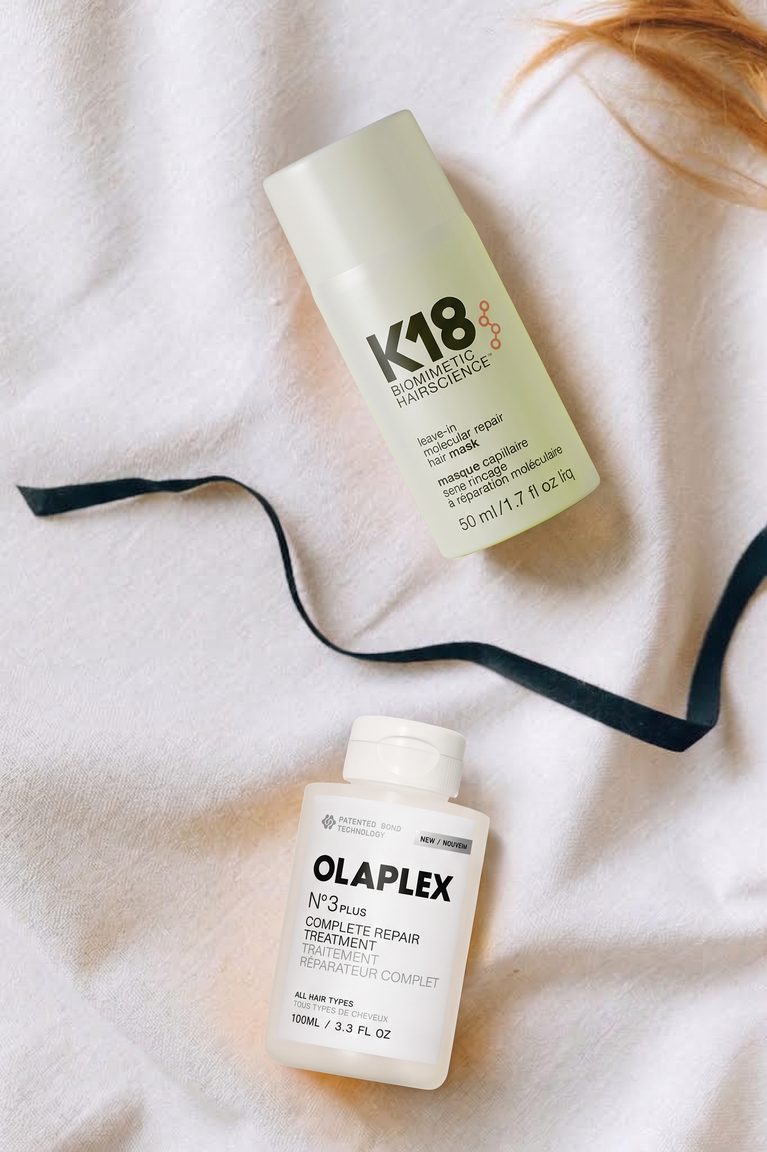
Choosing a gentler styling tool may help reduce further stress, but neither the Dyson Airstrait nor the ghd Duet Style can reverse damage that has already happened. If your hair feels brittle, overly porous or prone to breakage, consider adding a dedicated repair treatment to your routine. Our K18 vs Olaplex guide explains how the two treatments work, where they differ and which may be better suited to your hair.
Which is better for thick, curly or frizzy hair?
The Dyson Airstrait is the stronger all-round choice for thick or frizz-prone hair because it offers more control over temperature and airflow and can dry the roots with its arms locked. Its airflow method also leaves some natural body rather than compressing every section flat.
For very curly hair, neither device guarantees a one-pass result. Small sections, good tension and patient root work still matter.
The ghd may appeal more if your hair is coarse and your priority is the sleekest possible finish. Its plates and Shine Shot mode can create a more pressed result, although that also means more direct heat contact.
Which is better for fine hair?
Fine hair does not always need the Dyson’s power or price. The ghd Duet Style can be excellent if you want a smooth finish and use sensible section sizes, but its body is relatively bulky.
The Dyson’s adjustable settings make it easier to reduce the heat and airflow, while its air-only straightening can leave fine hair with more movement. If flat roots are your main concern, the ability to pre-dry them with the arms locked is useful.
For fine hair, the Dyson has the more nuanced controls. The ghd offers better value if you are happy with its simpler operating modes.
Controls and ease of use
Dyson provides more feedback and choice. Its LCD displays the selected mode, airflow and temperature, while the auto-pause feature stops the machine after a few seconds of inactivity.
The ghd has a simpler interface. There is less to customise, which some people will prefer, but it also means less control over how much heat and airflow you use.
Both tools are larger than an ordinary straightener. The Dyson weighs 0.92kg and has a large safety plug containing additional electronics. The ghd is also substantial because it houses both an air chamber and plates. Neither is an especially light travel tool.
Price and value
At the time of writing, Dyson listed the Airstrait at £349.99. The ghd Duet Style was £264.
At full price, the £70 difference is small enough that performance should drive the decision. During a significant ghd promotion, the value calculation changes. Paying almost £186 more for the Dyson is harder to justify unless you particularly want its plate-free design, controls and faster wet-to-dry performance.
The ghd may also replace both a wet-to-dry tool and a conventional straightener because of Shine Shot. The Dyson is more specialised: excellent at smooth wet-to-dry styling, but less suited to creating a sharply pressed finish or bends with hot plates.
The downsides nobody should ignore
Dyson Airstrait downsides
- It is expensive
- The safety plug is unusually large
- It is not dual voltage, so overseas travel needs planning
- The finish may not look as pin-straight as a hot-plate styler
- Roots still require a separate pre-drying step with the arms locked
ghd Duet Style downsides
- It is bulky and can feel heavy during a long routine
- It gives you fewer temperature and airflow choices
- The plates create more direct contact than the Dyson
- Shine Shot cannot be used until the hair is fully dry
- It may take longer on dense or very textured hair
Which one should you buy?
The Dyson Airstrait is better if you want to replace blow-drying and straightening with the cleanest possible one-tool routine. It is fast, adjustable and leaves hair smooth without clamping it between hot plates.
The ghd Duet Style is better if you want a polished straightener finish, regularly restyle dry hair and prefer a lower price. Shine Shot makes it the more versatile choice for someone who still wants the effect of traditional ghds.
If both cost the same, the Dyson is my pick for wet-to-dry performance. If the ghd is heavily discounted, it becomes the smarter value buy—especially if sleekness matters more to you than natural movement.
Frequently asked questions
It is better for fast wet-to-dry styling, adjustable settings and avoiding hot plates. The ghd is better for a very sleek finish, dry styling and value.
Yes, but only in Shine Shot mode. The hair must be completely dry before you activate the 185°C plate-only setting.
It can replace straighteners if you prefer a smooth, natural finish. If you want extremely flat, glass-like hair or use straighteners to create waves and bends, you may still prefer a plate-based tool.
Both are designed to smooth frizz. Dyson claims up to a 66% reduction in frizz and flyaways, while ghd positions the Duet Style as producing a long-lasting frizz-free result. Actual performance will depend on hair type, products and technique.
Towel-dry thoroughly before using either tool. With the Dyson, use the locked arms to pre-dry the roots. With the ghd, follow the brand’s sectioning and root-drying instructions before moving slowly through the lengths.
One Comment