How to Choose a Retinal Strength for Beginners
If you are buying your first retinal, the best strength is almost never the highest one you can find. The best strength is the one you can use consistently without spending the next fortnight trying to repair your skin barrier.
For most beginners, 0.03% retinal is a sensible starting point. Choose around 0.01% if your skin is sensitive, dry or completely new to vitamin A. Strengths of 0.06% and above are better treated as progression steps, not shortcuts.
The percentage is useful, but it is not the whole formula. Encapsulation, supporting ingredients, packaging and how often you apply it all affect what your skin experiences.
The quick retinal strength guide
- 0.01% retinal: very sensitive skin or cautious first use
- 0.03% retinal: most beginners
- 0.05–0.06% retinal: regular retinol users ready to move across
- 0.1% retinal: advanced vitamin A users
- 0.2–0.24% retinal: experienced users who have progressed through lower strengths
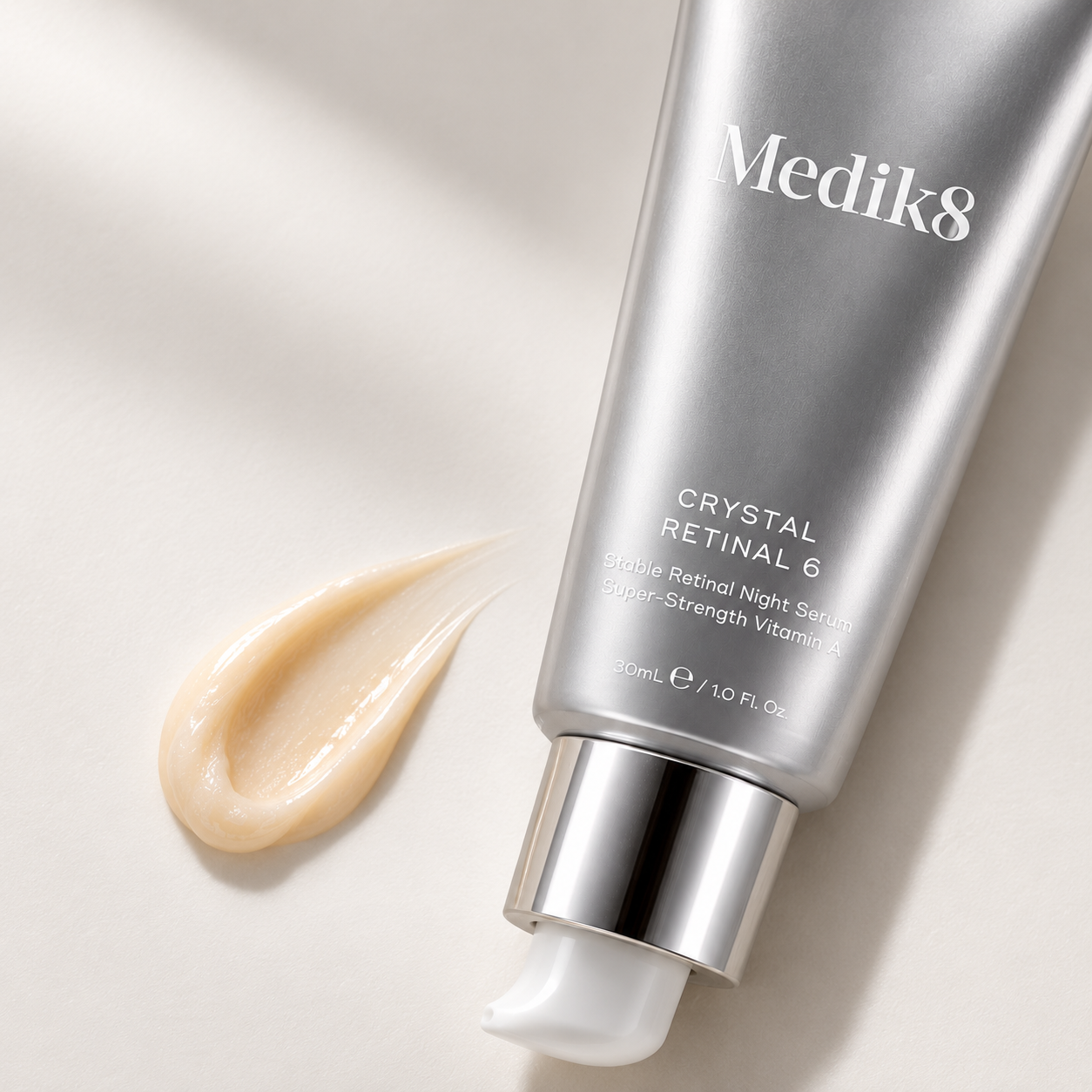
These are broad categories rather than medical dosing rules. Two products with the same headline percentage may not feel identical. Medik8 offer a wide range of strengths in their Crystal Retinal product.

What is retinal?
Retinal—also called retinaldehyde—is a vitamin A derivative used in evening skincare. In the skin’s conversion pathway, retinal sits one step closer to retinoic acid than retinol does. That makes it attractive to people who want a potent cosmetic retinoid without moving to prescription treatment.
It is still capable of causing dryness, peeling, redness and stinging. The word “retinal” does not guarantee that a product will be gentle, and moving faster is not automatically better.
Retinal vs retinol strength
A percentage comparison between retinal and retinol is not one-to-one. A 0.03% retinal serum should not be dismissed because the number looks smaller than a 0.3% retinol serum. They are different forms of vitamin A, used in different formulas.
If you already use retinol comfortably several nights per week, you may be able to begin above the lowest retinal tier. If you are new to all retinoids, start as a beginner regardless of how resilient you think your skin is.
Who should start with 0.01% retinal?
Choose a low strength if your skin is easily irritated, often dry, prone to eczema flares, recovering from over-exfoliation or completely new to retinoids. Starting low is also sensible when the rest of your routine already contains acids or other potentially irritating actives.
For context, Medik8 currently positions Crystal Retinal 1 at 0.01% for sensitive skin and Crystal Retinal 3 at 0.03% for new vitamin A users. That does not make the same numbers universal across every brand, but it is a useful example of how a progressive range is structured.
Who can start with 0.03% retinal?
A well-formulated 0.03% product is a practical first retinal for many people with balanced or oily skin and no history of retinoid sensitivity. It is also a reasonable transition for someone who has used a low-strength retinol consistently.
Do not compensate for a moderate starting strength by using it every night immediately. Frequency is part of the dose your skin experiences.
When 0.05% or 0.06% makes sense
This tier is better suited to someone who already tolerates retinol or a lower retinal strength without persistent irritation. It can be a destination rather than a stepping stone; you do not need to keep increasing if your skin is comfortable and you like the results.
If you are changing both the strength and the brand, treat it like a new product. Different delivery systems and base formulas can change how it feels.
Why beginners should avoid 0.1% and above
Higher strengths reduce your margin for error. A few consecutive nights, an exfoliating toner or a cold-weather barrier wobble can turn a promising routine into redness and peeling.
Current progressive ranges generally reserve 0.1% for advanced users and 0.2–0.24% for experienced or expert users. Those labels are more useful than treating the highest number as the best value.
How to introduce retinal gradually
- Patch test according to the product instructions.
- Use retinal twice a week for the first two weeks.
- If your skin is comfortable, move to every other night for two weeks.
- Only then consider more frequent use.
- Apply moisturiser and use broad-spectrum sunscreen every morning.
Medik8 gives this twice-weekly, then alternate-night, then nightly progression for its Crystal Retinal range. Your own product may give different instructions, and sensitive skin may need longer at each step.
How much retinal should you use?
Follow the dispenser instructions. For many face products, a pea-sized amount or one to two pumps is enough for the face. More product does not speed up adaptation; it simply raises the chance of irritation.
Apply to clean, dry skin in the evening, avoiding the eyelids, corners of the nose and lips unless the product specifically says it is suitable there. Follow with moisturiser.
The moisturiser sandwich method
If retinal stings or dries your skin, apply a thin layer of moisturiser first, then retinal, then another layer of moisturiser. This can soften the initial impact without forcing you to abandon the ingredient.
The sandwich method is not a challenge to tolerate a strength that is clearly too high. If you have ongoing burning, marked redness or peeling, reduce frequency, pause and allow the skin to recover.
What not to use in the same routine
When you are starting retinal, keep exfoliating acids, scrubs, benzoyl peroxide and microneedling-style products on separate evenings unless a clinician or the manufacturer has told you otherwise.
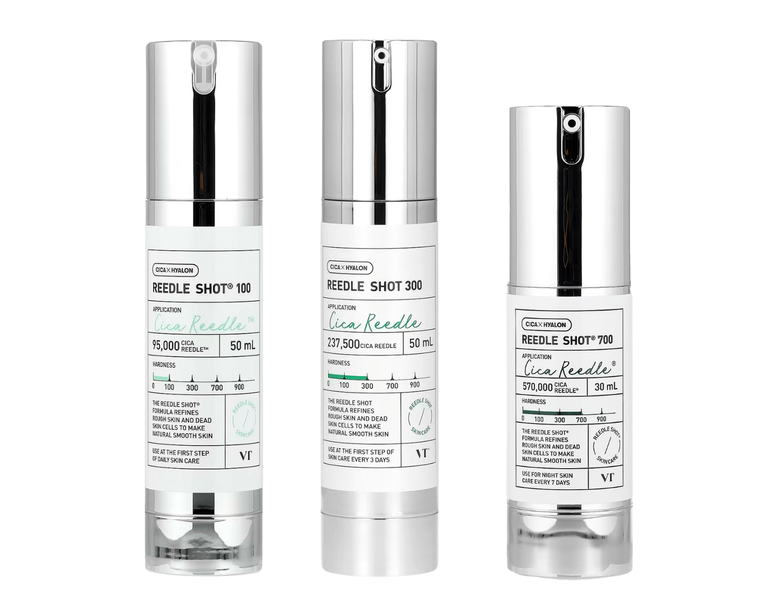
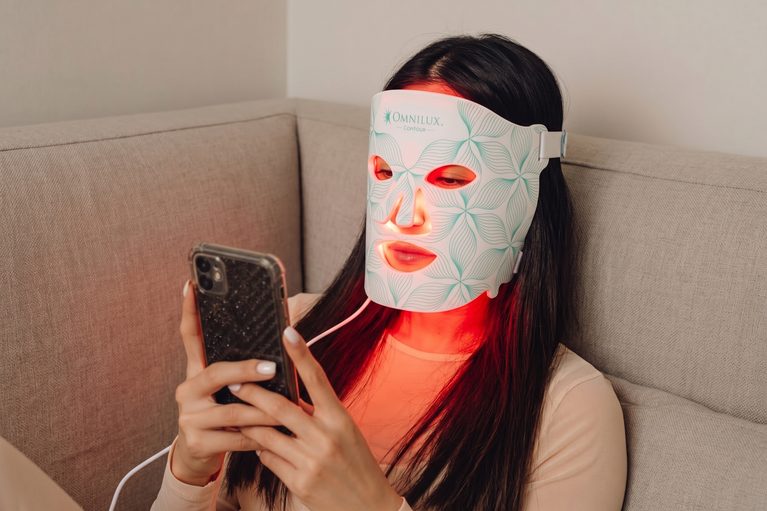
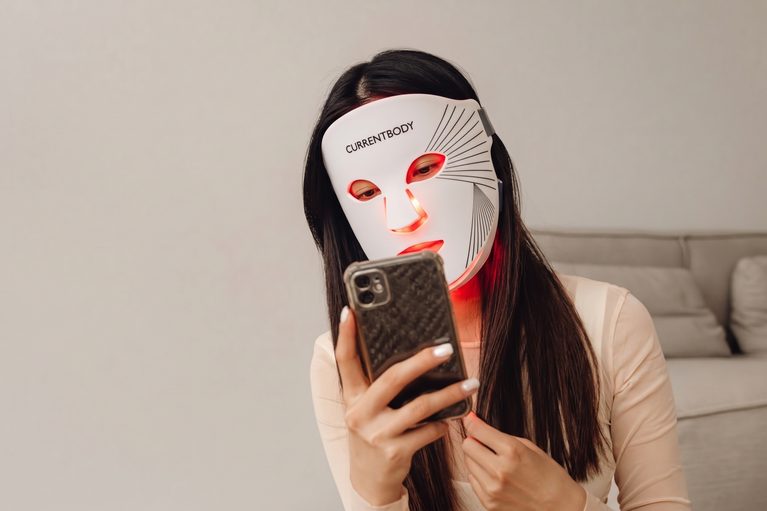
That includes treating VT Reedle Shot as its own active step while you learn what your skin tolerates. LED is not an exfoliant, but it is still sensible to establish each new routine separately; our guide explains how often to use an LED mask.
When should you move up a strength?
Move up only when you can use your current strength consistently without meaningful irritation and you have given it enough time. Finishing a full tube is a more useful checkpoint than waiting two weeks and chasing a stronger percentage.
Medik8 advises using at least one tube at the current level before moving up its ladder. Even then, moving up is optional. Consistency at 0.03% or 0.06% may be a better routine than repeatedly stopping a 0.1% product.
Retinal safety and sunscreen
Use retinal at night and wear broad-spectrum sunscreen during the day. Retinoids can make a routine less forgiving of sun exposure, and daily SPF also protects the concerns—such as uneven tone and visible ageing—that prompted many people to use retinal in the first place.
Avoid cosmetic vitamin A products during pregnancy. If you are breastfeeding, trying to conceive, managing a skin condition or using prescription acne treatment, ask your GP, pharmacist, midwife or dermatologist before adding retinal.
The bottom line
Start with 0.03% retinal if your skin is generally tolerant and you are new to retinal. Start around 0.01% if you are sensitive or new to all vitamin A. Consider 0.05–0.06% if you already use retinol comfortably.
Do not begin at 0.1% simply because it sounds more effective. The strongest retinal is the one that produces results without repeatedly forcing you to stop.
Frequently asked questions
For most beginners, yes. A 0.1% retinal formula is generally positioned for advanced vitamin A users. Starting around 0.01% or 0.03% gives you room to establish tolerance.
It can be appropriate for someone who already tolerates retinol, but it may be more than a completely new or sensitive user needs. Formula design also affects tolerability, so compare more than the percentage.
A sensible start is two evenings per week for two weeks. If the skin remains comfortable, increase to every other night before considering nightly use.
Yes, but beginners often find it simplest to use vitamin C in the morning and retinal at night. This keeps the routine easy to monitor and leaves room for daily sunscreen.
Reduce the frequency or pause if you develop peeling, burning or persistent redness. Resume only when the skin is comfortable, and seek professional advice for severe or continuing irritation.